
A field guide to cutting software bloat: the one distinction that tells you what to keep, a 3-question audit to run today, what each category of tool is really for, and the lean stack that actually runs a creative shop.
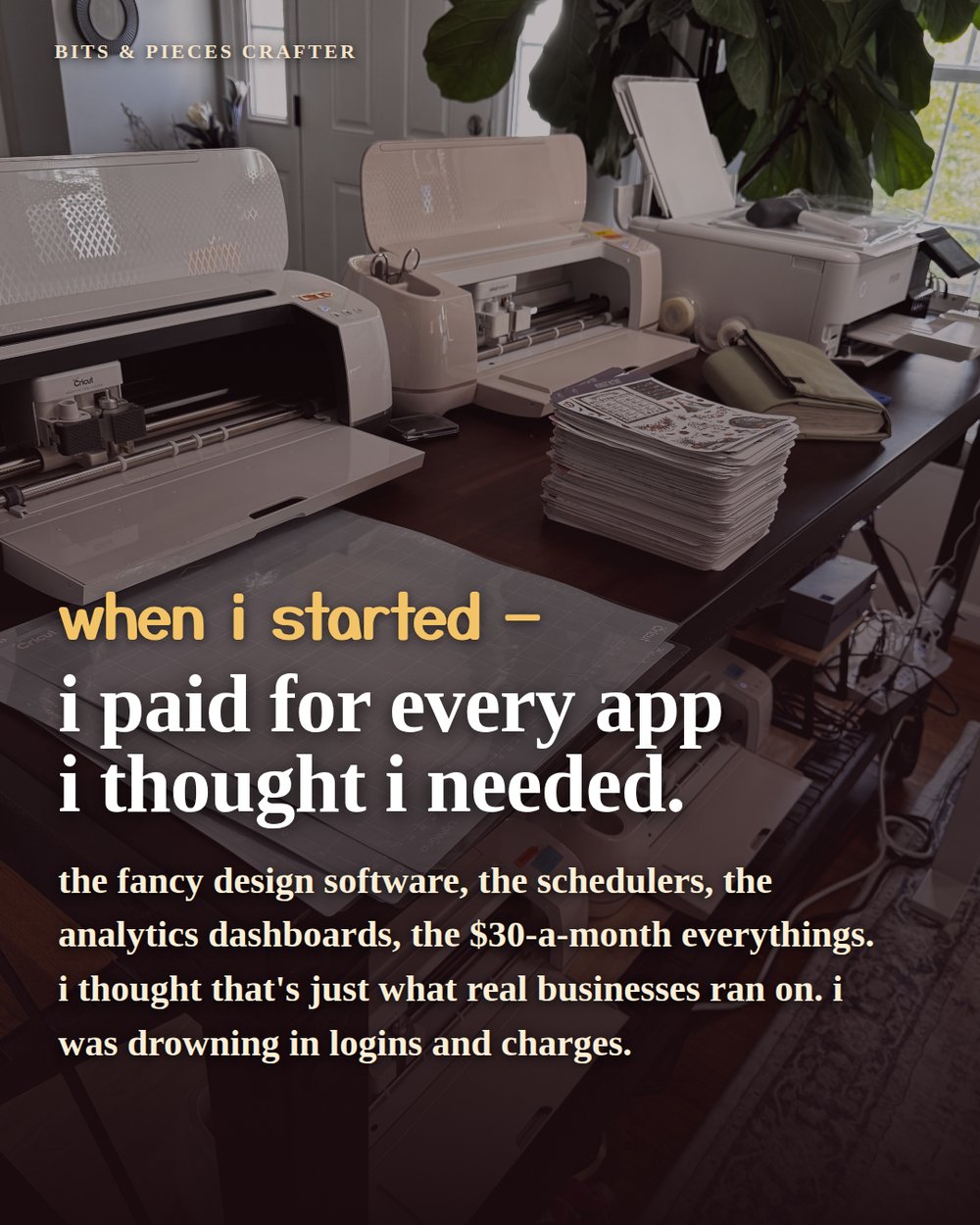
When I finally sat down and added up my business software, I wasn't losing money to supplies or shipping. I was losing it to a graveyard of subscriptions — a design suite I opened twice, a scheduler I'd forgotten existed, an analytics dashboard I never once looked at, and three 'all-in-one' tools that each did a sliver of what they promised. Close to two hundred dollars a month, for the feeling of being a real business.
If you're early in a creative business and your bank statement is quietly filling with recurring charges, this post is a system, not a scolding. By the end you'll have a clear way to decide what to keep, what to cancel, and how to stop the bleed for good — without gutting anything you actually need.
First, understand why this happens (it's not a discipline problem)
Software creep isn't laziness. It's designed. Free trials convert to paid automatically, tools are priced low enough per-month that no single charge feels worth cancelling, and every sign-up gives you a little hit of 'now I'm serious about this.' Stack a year of those small, reasonable-feeling decisions and you've built an expensive habit you never actually chose. Naming that is the first step, because you can't fix a problem you think is a personal failing.
The core distinction: tools you grow into vs. subscriptions you feel guilty about
Here's the single idea that makes every future decision easy. There are two kinds of things you pay for, and they are not the same.
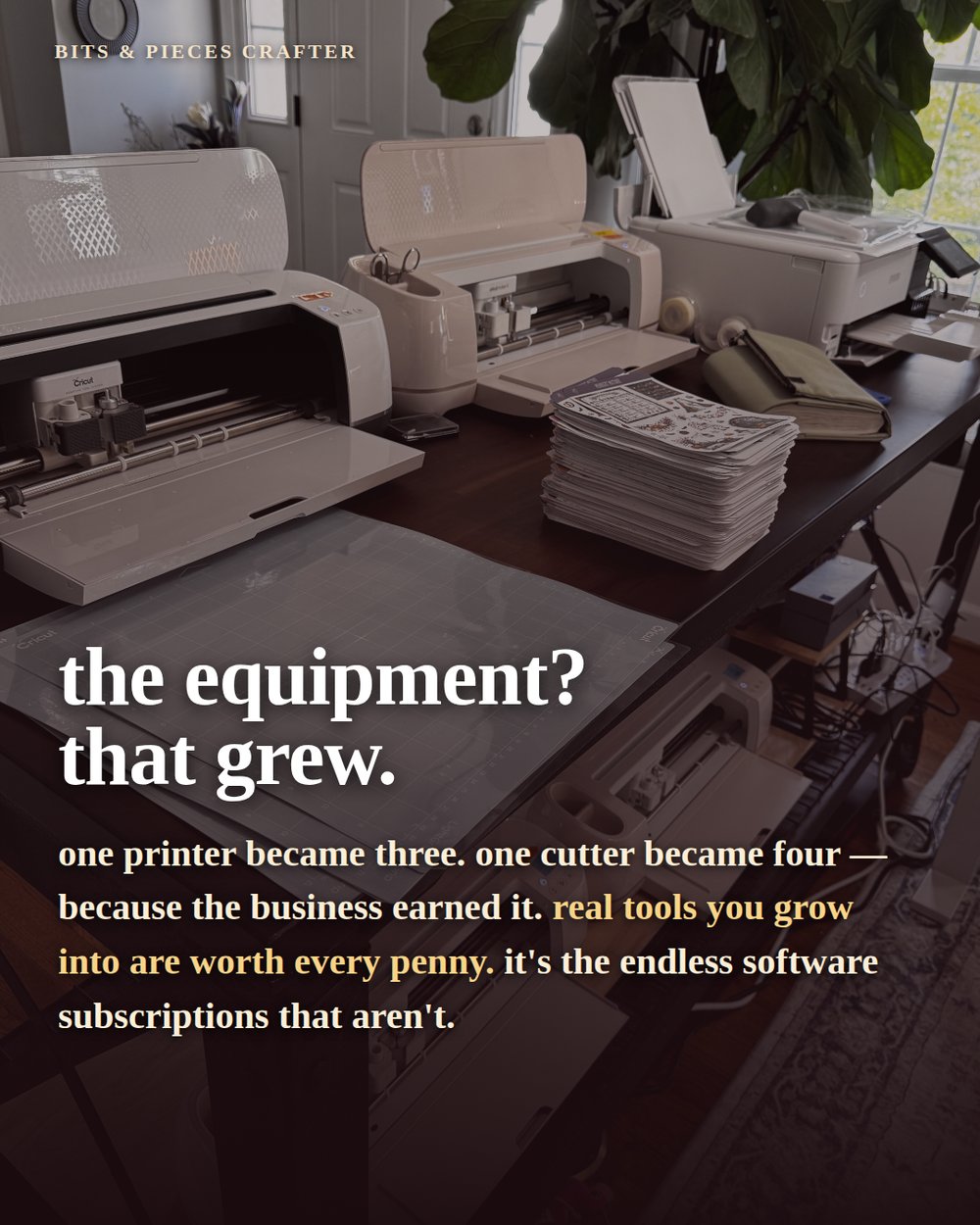
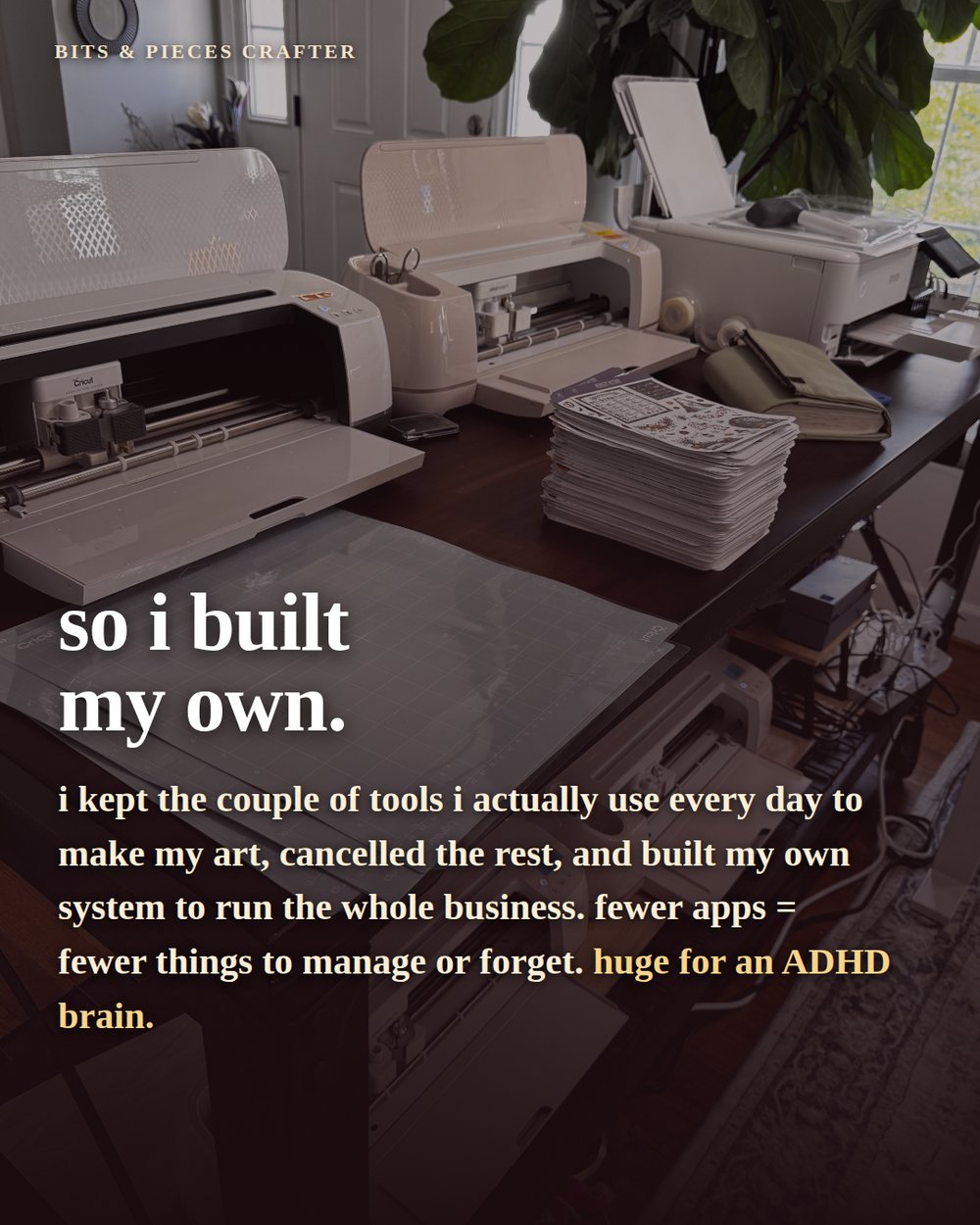
A tool you grow into is something you use constantly to actually make or ship your work, and it scales with real output. My printers and cutting machines are the clearest example — one printer became three, one cutter became four, but only because the orders justified each one. That money is tied directly to things I sell. It's an investment, and I never resent it.
A subscription you feel guilty about is the opposite: something you signed up for because it seemed like what a 'real' business should have, that you open once a month out of obligation, and keep paying for mostly because cancelling feels like admitting you wasted money. That guilt is not a character flaw — it's data. It's the most reliable signal you have that a tool isn't earning its place.
Run the 3-Question Stack Audit (do this today)
Open your bank or card statement and highlight every recurring business charge. Actually look — most people find two or three they'd completely forgotten.
Then put each one through these three questions:
1. When did I last open this, and did it directly help me make or sell something? If you can't remember the last time, that is your answer.
2. If this disappeared tomorrow, what would actually break? If the honest answer is 'nothing I couldn't do another way,' it isn't essential — it's a nice-to-have you're renting.
3. Am I keeping this because it works, or because cancelling feels like failure? Sunk cost is not a reason to keep paying. The money you've already spent is gone whether you keep it or not.
Cancel anything that fails all three. Downgrade anything on a plan bigger than you use. And here's the safety net that makes this painless: you can re-subscribe the day you genuinely need something. Almost every tool is delighted to take you back, often with a discount to win you over. Cancelling is reversible; the monthly bleed is not.
What each category of software is actually for (and when to skip it)
Most creative-business tools fall into a handful of buckets. Here's how to think about each:
1. Design tools — usually worth one, rarely worth several. Pick a single one you know well. The 'pro' features you're paying extra for often go untouched; check whether the free or cheaper tier covers what you truly use.
2. Schedulers — a genuine time-saver once your volume is high, and pure overhead before that. If you're posting a few times a week, native scheduling or a free tier is plenty. Don't pay to schedule content you could post in the same ten minutes.
3. Email marketing — worth starting early, but almost always on a free tier at first. Your list of 40 people does not need the premium automation plan. Grow into it.
4. Analytics dashboards — the most commonly wasted spend for small makers. The built-in stats on each platform tell you what you actually need to know. A paid dashboard is answering questions you're not big enough to be asking yet.
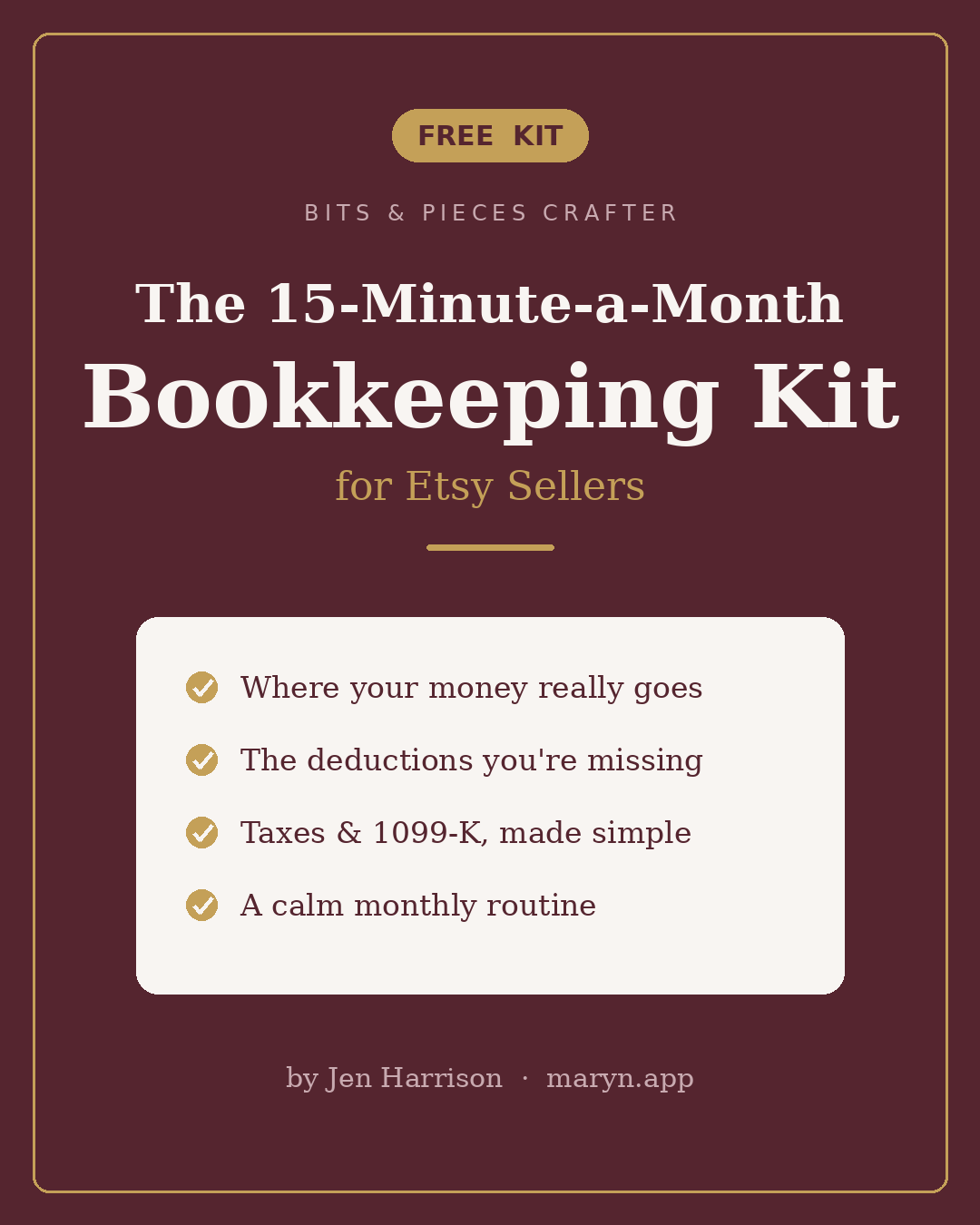
5. Bookkeeping / money tracking — worth having a system from day one, but 'a system' can be simple. This is the one category where going without hurts you, because you can't grow what you refuse to look at. You can also get my FREE Bookkeeping Kit here
TRY THIS TODAY
Cancel exactly one subscription that failed the audit — the most obvious dead weight. Not all of them, just one, right now. The point is to break the spell that cancelling is hard. You'll feel the relief immediately, and it makes the next one easy.
What actually grows a creative business
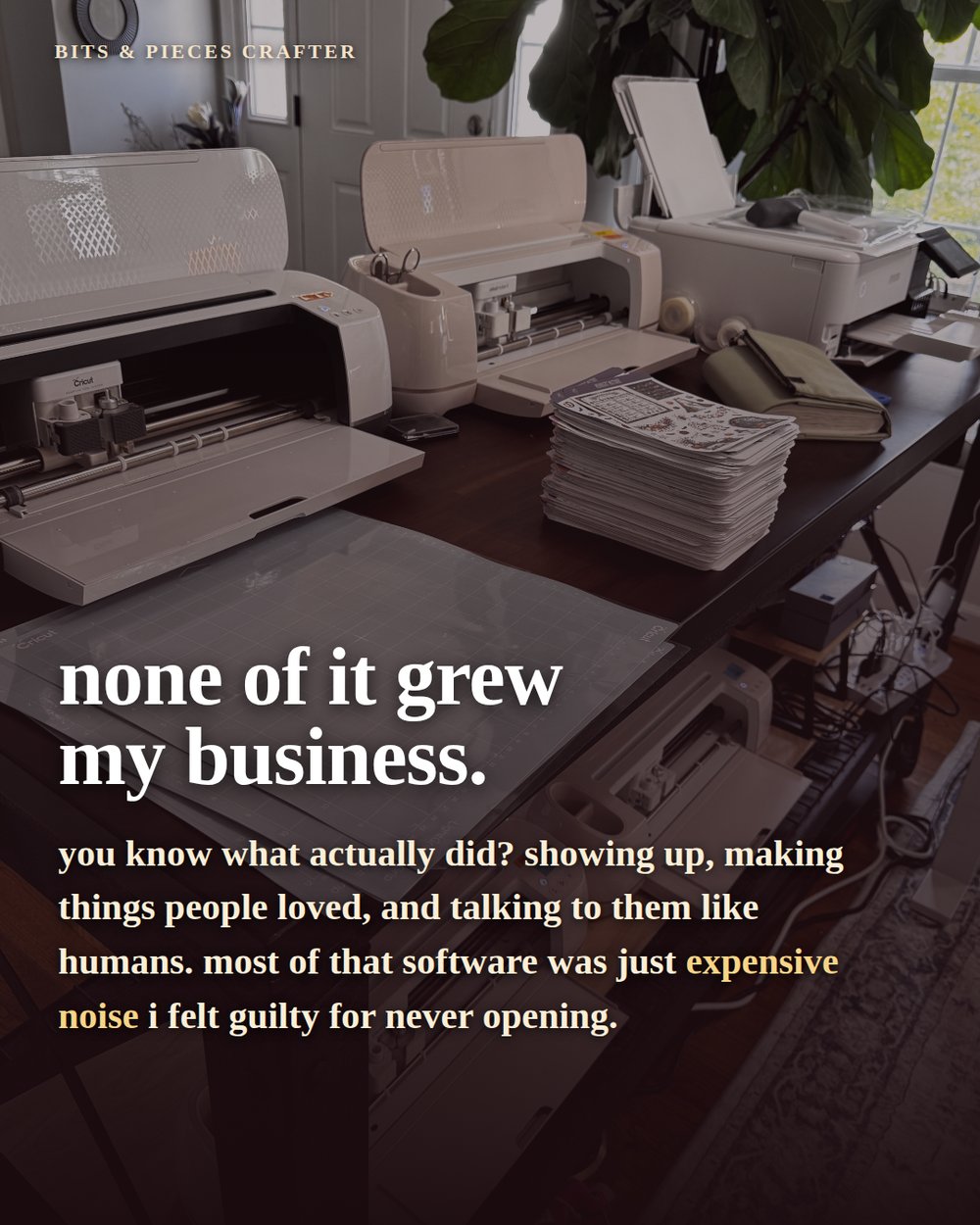
Here's the part that stings and then sets you free: in my whole business, not one subscription ever produced growth I could trace. The analytics suite never made a sale. The scheduler never made my work better.
Growth came from four things, and none of them come with a monthly fee — showing up consistently, making things people genuinely love, talking to customers like humans, and getting a little better at your craft each month. Software can occasionally support those. It can never replace them, and buying more of it is not the same as doing them.
The lean stack that actually runs my shop
After the great cancellation, my stack got embarrassingly small and my business didn't miss a beat. I kept the couple of tools I use every single day to make my art, one simple way to handle the money and orders, and almost nothing else.
Fewer apps meant fewer logins, fewer charges, and — for an ADHD brain especially — far less mental clutter. That last part is the hidden cost of an over-stuffed stack: it isn't only the money, it's the tabs, the passwords, the low-grade guilt, and the decision fatigue of maintaining tools you don't use.
Simplifying gave me back both dollars and attention, and attention is the harder one to earn back.
KEY TAKEAWAYS
• The apps don't make the business — you do; buying tools isn't the same as doing the work.
• Sort every expense into 'tool you grow into' (tied to real output) or 'subscription you feel guilty about' (cancel it).
• Run the 3-question audit on your statement today: last used? what breaks without it? keeping it out of fear?
• Most design, scheduling, email, and analytics tools can start free or be skipped; bookkeeping is the one to keep from day one.
• Cancelling is reversible. Start with one.
The 'one simple way to handle the money and orders' is exactly why I built maryn.app — one calm place instead of a dozen logins. Come see how it works.