How watching other shops slowly erodes the very thing that makes you worth following, why the algorithm rewards sameness, and a practical 'make more than you scroll' plan to get your own voice back.
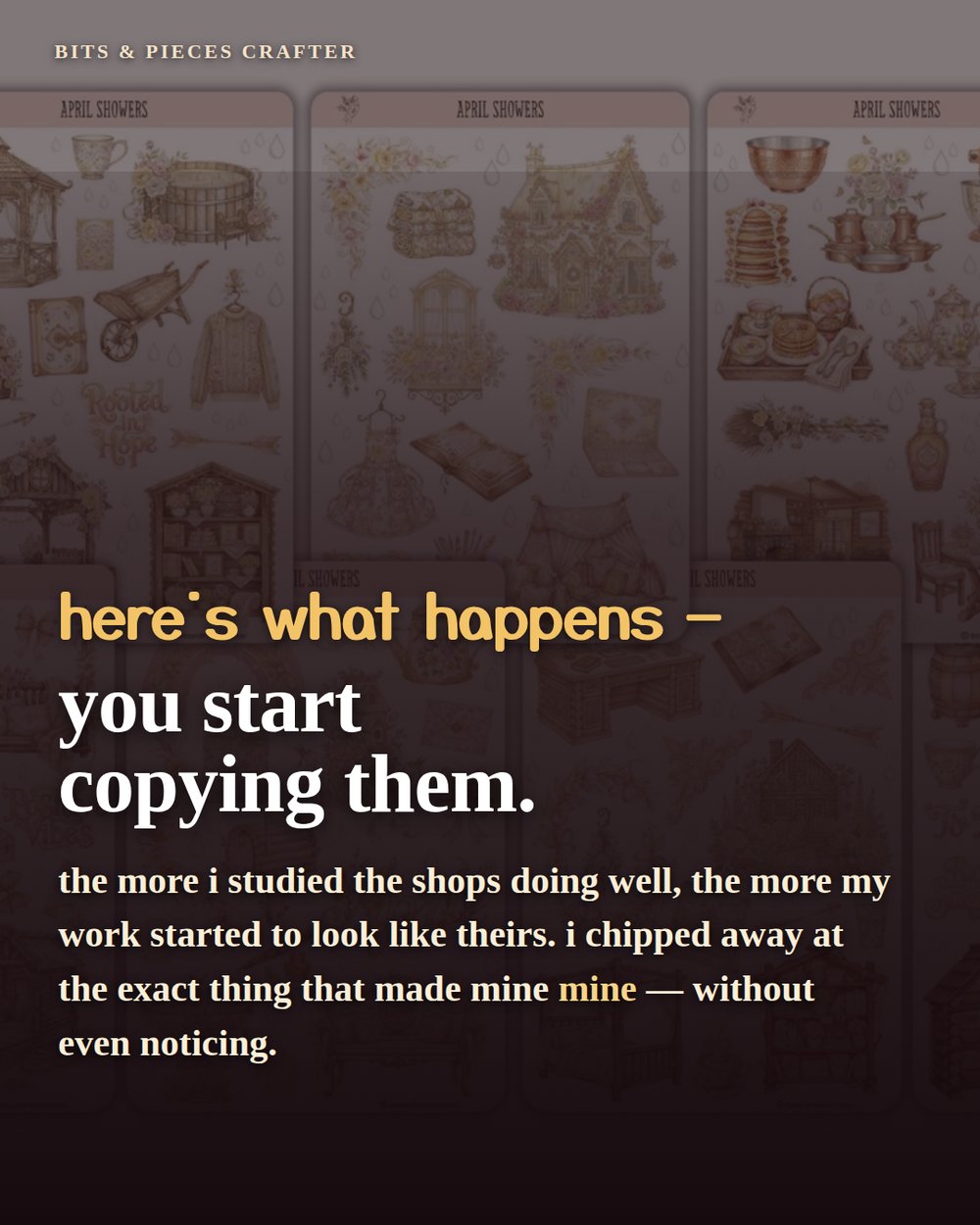
The more I watched other shops, the less I sounded like me. I didn't notice it happening — that's the dangerous part. I'd study the accounts that were 'doing it right,' absorb their colors and captions and pacing, and slowly my work drifted toward the middle of everything I was consuming. It got more polished and less mine at the same time. If your work has started to feel a little generic and you can't figure out why, comparison is the likeliest culprit, and this post is how to reverse it.
This isn't a 'just don't compare yourself' pep talk, because that advice is useless — comparison is human and the apps are built to trigger it. It's a practical look at how comparison erodes your style and what to do about it in real terms.
How comparison actually erodes your voice
Comparison damages you in two directions at once. The obvious one is emotional: you measure your behind-the-scenes against everyone else's highlight reel, feel inadequate, and lose the nerve to make anything. But the sneakier damage is creative homogenization. The more you steep in other people's work, the more your own drifts toward an average of all of it. You start unconsciously copying what seems to be working, and in doing so you sand off the very quirks that made you findable in the first place.
The irony is brutal: trying to keep up makes you blend in, and blending in is the one thing that guarantees no one notices you.
Why the algorithm rewards sameness (and why that's a trap)
It feels like the platforms are pushing you toward a certain look because that look 'works.' Sometimes short-term, it does — a trend can spike. But a feed full of people all chasing the same aesthetic is a feed where no single one of them is memorable.
Trends are borrowed attention; your style is owned attention.
When you copy what's hot, you're renting a moment that expires when the trend does.
When you lean into what's distinctly yours, you build something that compounds, because you become the only source for it. The strategy that feels safe (blend in with what's working) is actually the fragile one.
The make-more-than-you-scroll plan
The antidote is a shift in your input-to-output ratio. Right now, most struggling makers consume far more than they create — hours of scrolling, minutes of making. Flip it.
The more time you spend making versus watching, the more your own voice reasserts itself, simply because it has room to.
Here's how to actually do it:
1. Audit your inputs. For a few days, honestly notice how much time you spend looking at other makers' work versus making your own. The ratio is usually a shock, and it's the whole problem in one number.
2. Create before you consume. Make something — anything — before you open the apps each day. Your first creative hours should be fed by your own head, not by a feed that resets your taste to everyone else's.
3. Curate ruthlessly. You can't quit the platforms, but you can mute or unfollow the specific accounts that reliably make you feel behind or make you want to copy. Protect your eye like the asset it is.
4. Study across, not within. When you do seek inspiration, look outside your exact niche — art, nature, vintage design, other crafts entirely. Cross-pollination sparks originality; staring at direct competitors just breeds imitation.
TRY THIS TODAY
For the next three days, make one small thing each morning before you open Instagram or TikTok — a doodle, a caption, a color combo, anything. You're retraining your brain to start from your own voice instead of the feed's. Notice whether your work starts feeling more like you again.
Comparison as a tool, used carefully
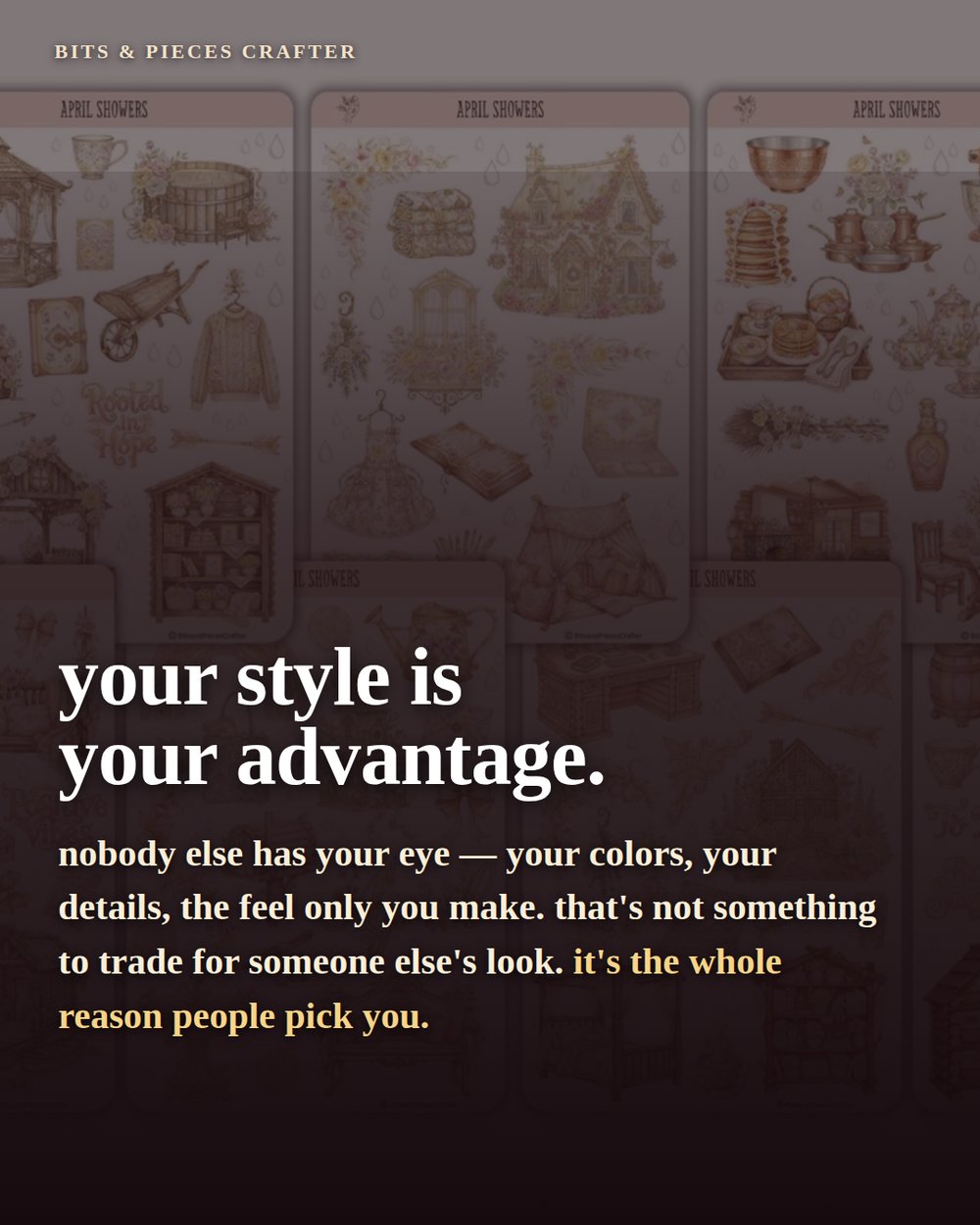
Comparison isn't purely poison — used deliberately, a competitor's success can teach you something specific. The difference is intention. 'Let me study how they structured that launch' is a targeted lesson you take and close the tab. 'Let me scroll their whole feed and feel bad' is the slow erosion. Use comparison as a scalpel, never as a soaking bath. Your style — the specific, slightly weird, unmistakably-you thing — is the only truly uncopyable asset you have. Protect it by making more than you watch.
KEY TAKEAWAYS
• Comparison hurts twice: it kills your nerve and quietly averages your style toward everyone else's.
• Copying what's 'working' sands off the quirks that made you findable — blending in guarantees invisibility.
• Trends are rented attention; your distinct style is owned attention that compounds.
• Flip your ratio: create before you consume, and make more than you scroll.
• Use comparison as a scalpel for specific lessons, never as a soaking bath you sit in.
My style took years of leaning in to find, and it's the reason the shop is mine and no one else's. Come see where that leads: Etsy Bits & Pieces Crafter.