
Go find the very first thing you ever made to sell — your first sticker, first listing, first logo, that product photo you were once so proud of. If it makes you wince, good.
That wince is the most useful feeling in this whole post, and by the end you'll understand why it's a sign you're doing something right, plus exactly how to keep shipping even while it's happening.
Almost every maker is quietly held back by the same fear: that their work isn't good enough to show yet. So they wait, and tweak, and 'launch when it's better.' Here's why that instinct is backwards, and what to do instead.
Why the cringe is a growth signal, not a verdict
The reframe that changes everything: cringing at your old work doesn't mean it was bad. It means your taste grew. You can only see the flaws in last year's work because this year's eye is sharper. If your first products still looked flawless to you today, that would be the real problem — it would mean you hadn't developed at all in the meantime.
Taste almost always develops faster than skill. You can see what 'good' looks like before your hands can reliably make it, so there's a gap — and that gap feels like inadequacy. It isn't. It's the exact engine of improvement. The discomfort is the sensation of your standards rising. Every maker you admire has a folder of early work that makes them wince, and they'll all tell you the same thing: they're glad they made it, and gladder they didn't wait to be 'good' before they started.
The trap: perfectionism's moving finish line
Perfectionism is sneaky because it doesn't feel like fear — it feels like having standards. 'I just want it to be really good first' sounds responsible. But watch what actually happens: you fix the design, and now the photos aren't good enough. You fix the photos, and now the description needs work. You polish the description, and now you're second-guessing the price.
The finish line moves every time you approach it, because your rising taste keeps redefining 'good enough' just out of reach. If your launch condition is 'when I'm not embarrassed anymore,' you will never launch, because that day is structurally impossible. Understanding this is what lets you stop waiting for a moment that isn't coming.
What your audience actually judges (hint: not what you do)
You are the worst possible judge of your own early work, because you're comparing it to the polished version in your head. Your audience can't see that version. They're meeting your work fresh, comparing it to nothing, judging only whether it's useful, clear, or lovely to them. Those are very different standards, and theirs is far kinder than yours.
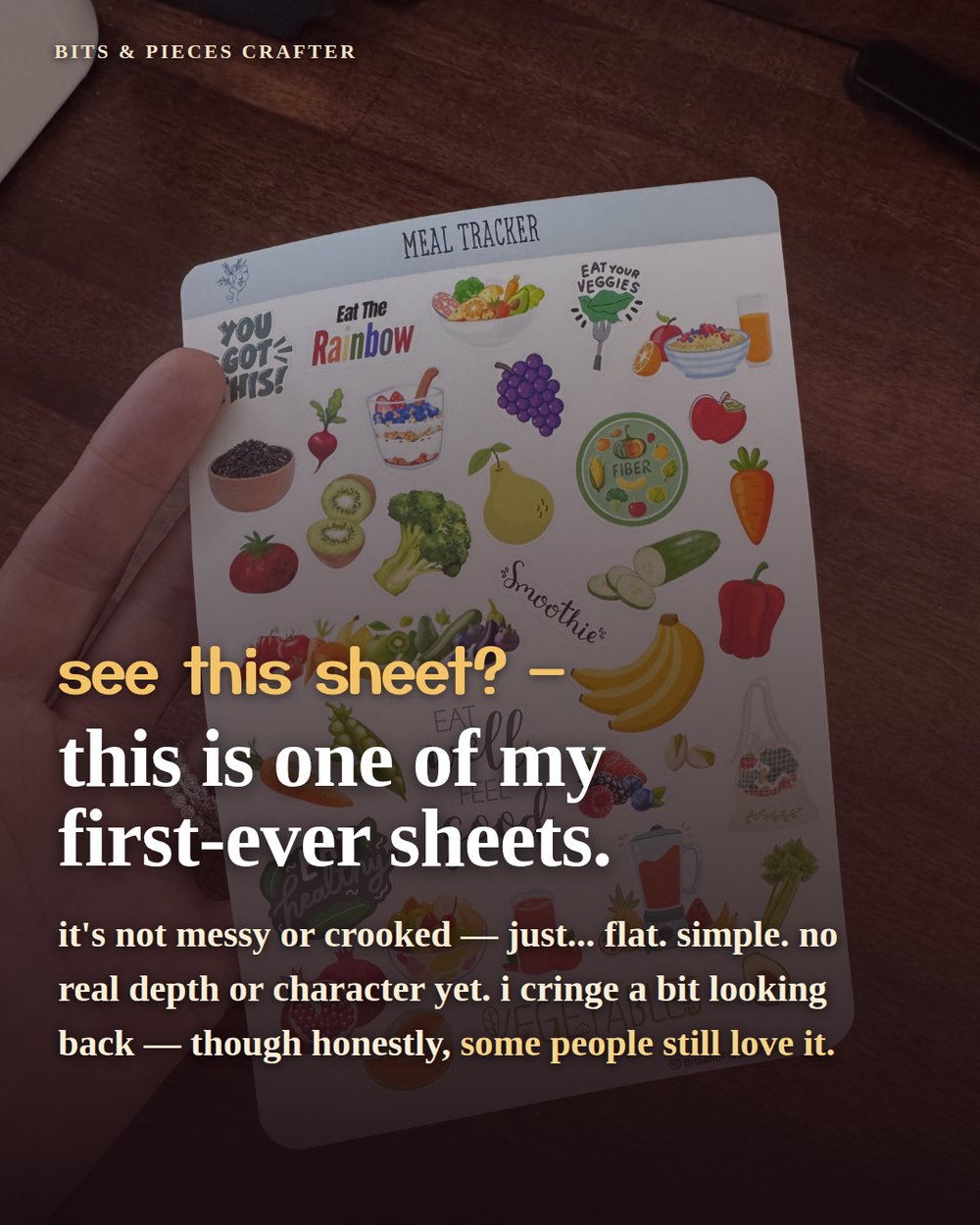
This is why the thing you almost didn't post is so often the thing someone needed. When I finally shared work I thought was too plain, some people genuinely loved it — sometimes because of the simplicity, not despite it. 'Not as good as what I make now' is not the same as 'bad.' Simple and honest has real charm, and plenty of customers are happy to be there while you find your feet.
A method for shipping before you feel ready
Knowing you should start is useless without a way to override the flinch. Here's a concrete method:
1. Define 'done' in advance, in writing. Decide the exact bar before you begin — for a product that might be 'clear photo, honest description, priced fairly.' When you hit those, you ship. No adding new conditions mid-way; that's the moving finish line sneaking back in.
2. Give it a real deadline. Open-ended projects get polished forever. A date — even a self-imposed one — forces the decision and starves perfectionism of the endless time it feeds on.
3. Separate making from judging. Your job is to put the work out. Deciding whether it's good is the audience's job, the algorithm's job, and future-you's job — and you'll make far better calls with real feedback than with anxious 11pm guessing.
4. Plan for version two from the start. Publishing isn't permanent. You can relist, reshoot, reprice, and improve anytime. The first version's only job is to exist so a second one has something to grow from.
TRY THIS TODAY
Take the thing you've been sitting on — the listing, the design, the post — and give it a deadline of 24 hours. Meet your pre-written 'done' bar, then publish it exactly as-is. Notice that the sky does not fall, and that you now have real information you didn't have while it sat in drafts.
What I'd tell beginner me
If I could go back, I'd tell myself to post the cringey thing a year earlier. Not because it was good — it wasn't — but because every good thing I make now grew directly out of the imperfect things I was brave enough to release. The makers who 'made it' aren't the ones who started good. They're the ones who started, stayed visible while they were bad, and got better in public where their audience could grow alongside them.
KEY TAKEAWAYS
• Cringing at old work means your taste grew — it's a progress receipt, not a stop sign.
• Taste outpaces skill, so 'good enough' keeps moving; 'launch when not embarrassed' is a trap with no exit.
• Your audience judges your work fresh and far more kindly than you do — post the thing you almost didn't.
• Ship on purpose: define 'done' in writing, set a deadline, separate making from judging, and plan for version two.
• Getting better in public beats getting better in private and launching never.
Not sure what to make yet? Wander through my shop to see how a style grows over time — every set there started as something earlier: Bits & Pieces Crafter.