
In the first three days of March, I made $536 selling stickers on Etsy.
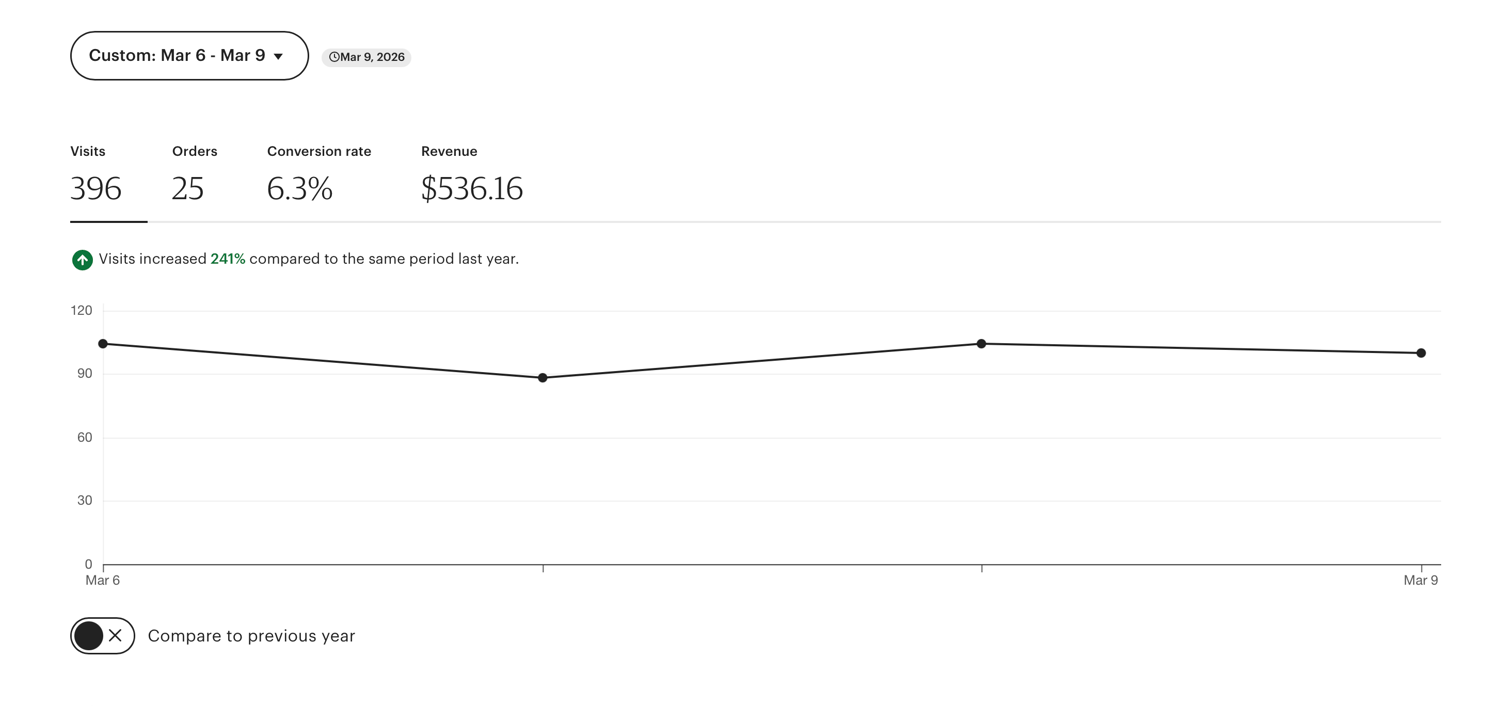
I have the screenshot right there above this paragraph. That's not a rounded-up number. That's not my best month ever. That's a weekend doing what I do.
And then sales slowed down.
Both things are true. And honestly? The second part might be more useful to you than the first.
Because if you've been selling on Etsy for any length of time, you know that slow weeks happen. You also know how disorienting it feels when a shop that was working suddenly goes quiet. You start second-guessing everything — your photos, your prices, your niche, your whole decision to start in the first place.
I've been there. More than once.
This post covers both sides: what actually drove that $536 week, and exactly what I do when sales drop off. I also have a free 30-day recovery plan at the bottom that you can download and start using today.
🆓 FREE DOWNLOAD
Want the full rescue plan? Grab the free Etsy Slow Sales Rescue Plan — a 17-slide guide
and printable 30-day checklist. → BitsAndPiecesCrafter.com
What Actually Happened That Week
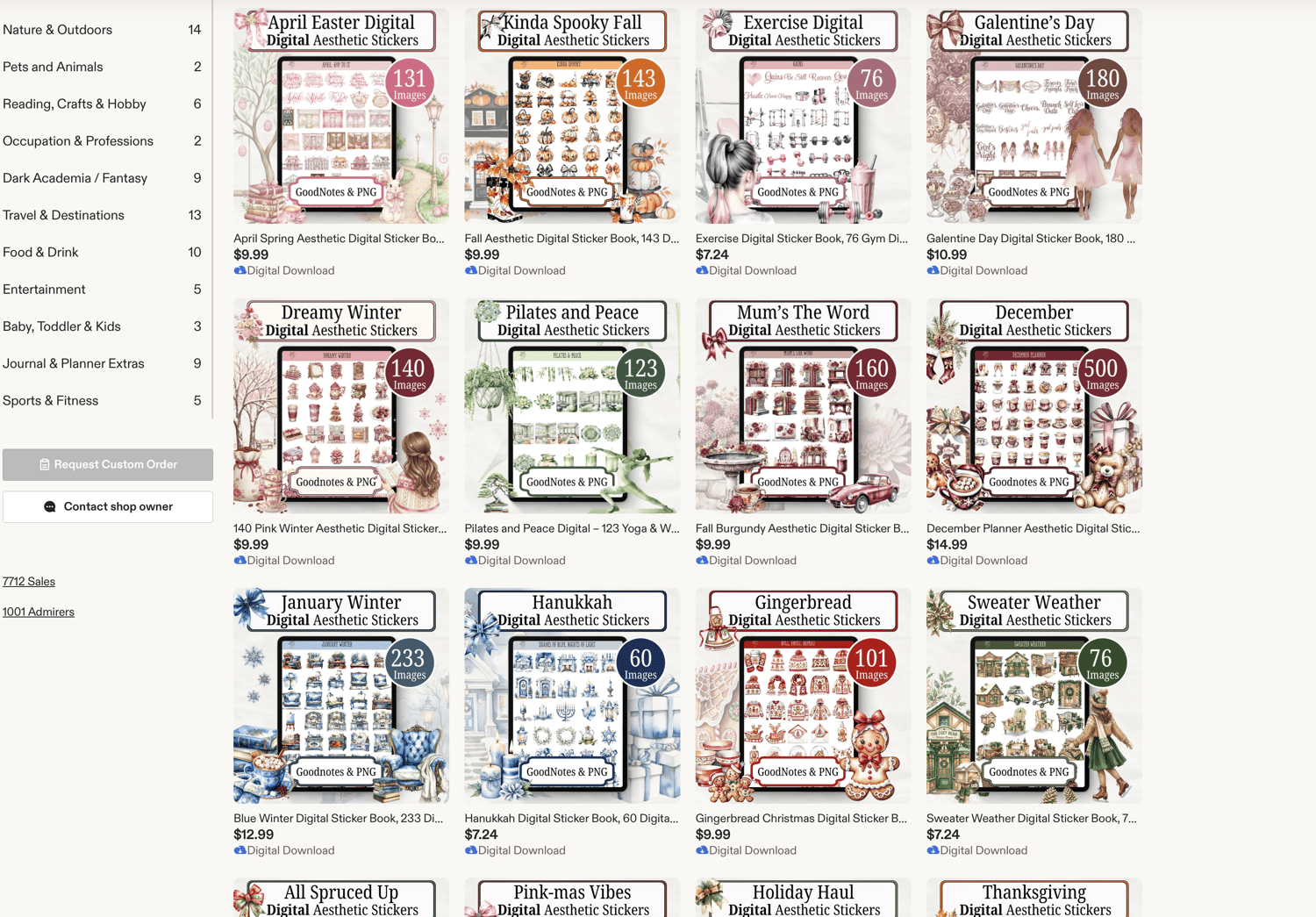
The $536 week wasn't a launch. There was no big promotion, no viral moment, no paid ad spike. It was a handful of existing listings getting traction at the same time.
Here's what was in place that made it possible:
• Listings with strong SEO — titles that led with buyer intent, all 13 tags filled with long-tail phrases
• Photos that stopped the scroll — clean mockups showing the sticker sheets in context
• Etsy ads running on my top 3–5 performers only, at a small daily budget
• New listings posted earlier in the week so they'd be indexed before the weekend
• A shop that had been building organic reviews for months
That last one matters more than people talk about. Etsy's algorithm factors in shop health signals — your response rate, your review velocity, your shipping reliability — before it decides how prominently to show your listings. A shop with 1,400+ five-star reviews gets more trust from the algorithm than a brand new shop with the same product. That trust compounds over time.
The $536 week was the result of all of those things working together. Not one magic trick.
The $536 week was the result of everything working together. Not one magic trick.
Why Sales Slow Down (And How to Figure Out Which Problem You Have)
When sales go quiet, most sellers do one of two things: they panic and change everything at once, or they freeze and change nothing. Neither works.
The better move is to diagnose first. Slow sales almost always have a cause. Here are the six most common ones:
• Poor SEO — your titles and tags don't match what buyers are actually searching for
• Weak photos — your thumbnail doesn't stop the scroll
• Low listing quality — missing descriptions, no trust signals, thin content
• Stale listings — no recent activity means no recent signal to Etsy's algorithm
• A seasonal dip — a natural rhythm that feels worse than it is
• Competition shift — your niche got more crowded and your listings stopped standing out
Most slow periods come down to one or two of these. Once you identify which one you're dealing with, the fix becomes a lot more specific — and a lot less overwhelming.
The System I Use to Bring Sales Back
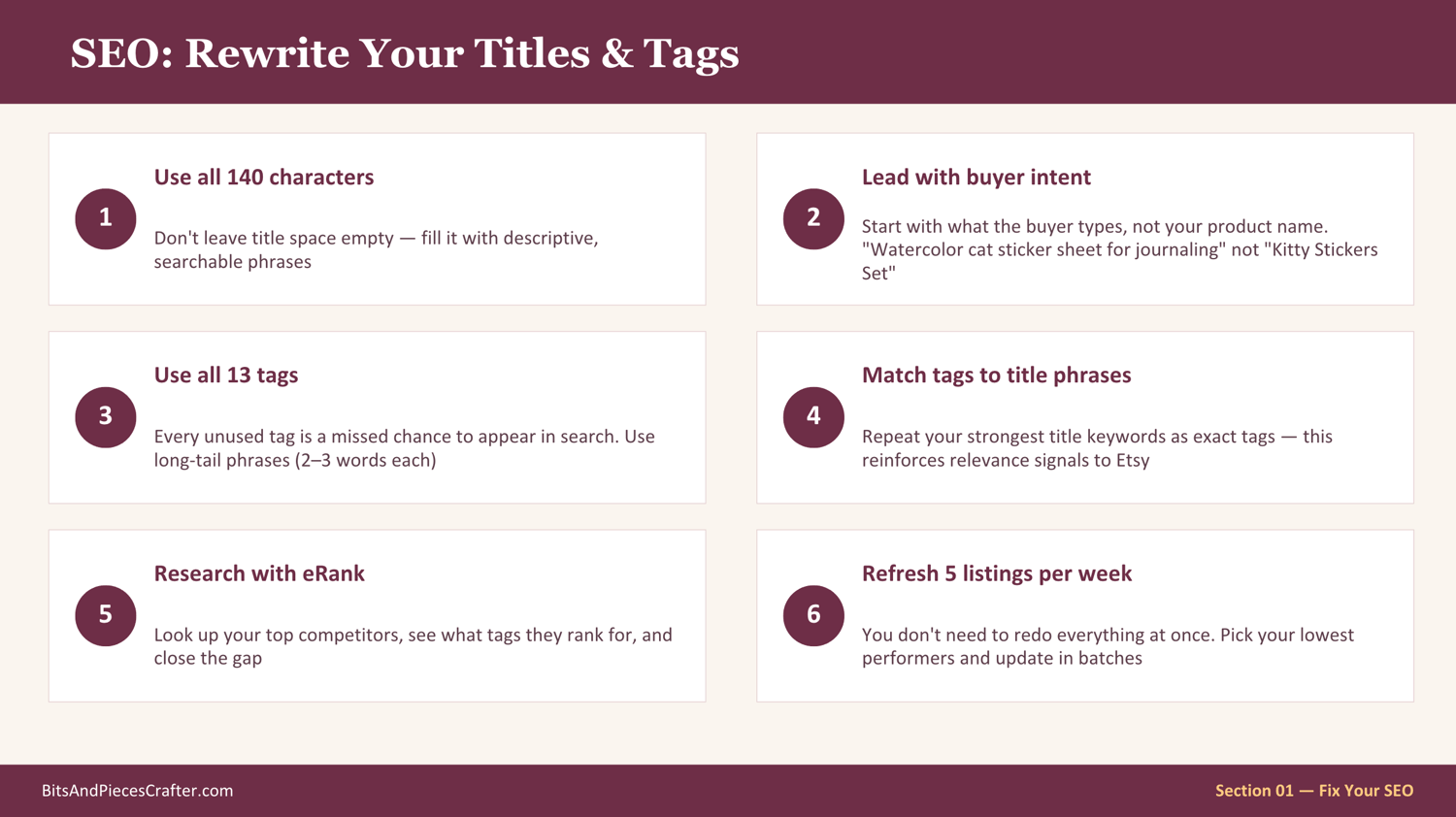
Over the past year of running my sticker shop, I've built a repeatable process for recovering from slow periods. I now teach this as the Etsy Slow Sales Rescue Plan — and it covers five areas:
1. Fix Your SEO First
This is the highest-leverage free action you can take. Rewrite your titles using this formula:
[Primary keyword] + [What it is] + [Who it's for] + [Use case or style]
Use all 140 characters. Fill all 13 tags with 2–3 word long-tail phrases that match how real buyers search. Refresh your five lowest-converting listings first — that's where you'll see the fastest return.
2. Refresh Your Listings to Signal Activity
Etsy rewards recent engagement. Even small edits — a sentence added to your description, a photo reordered, two tags swapped — can re-trigger indexing and move a stale listing back into rotation. Manually renewing a listing costs $0.20 and can bump it into fresh search results. It's one of the most underused tactics in the whole platform.
3. Drive Free Traffic From Outside Etsy
Pinterest is my favorite low-effort channel for Etsy sellers. Pin every listing with a keyword-rich description. Create boards organized by niche. Pins also surface in Google Image results — so one pin works twice.
Threads and TikTok work differently — they can spike fast, but they require showing up consistently with real content. The format that works best for me is honest behind-the-scenes: real numbers, real process, real slow weeks alongside the good ones.
4. Run Ads Smarter, Not Bigger
If you run Etsy ads, the most important rule is this: advertise proven listings only. Ads amplify performance — they don't fix problems. Start at $1–$3 a day on your top 3–5 performers. Give it 30 days before judging. Pause anything under 5x ROAS. And mine your ad data for new SEO tag ideas — Etsy tells you exactly which search terms triggered your ads.
5. Check Your Shop Health Signals
This is the section most sellers skip entirely. Etsy looks at your shop as a whole before deciding how prominently to show your listings. Star Seller status, review velocity, listing completion rate, and dispute rate all factor in. Reply to every message within 24 hours. Fill every optional field on your top listings. Add a 'what you'll receive' section to prevent disputes before they happen.
The 30-Day Recovery Plan
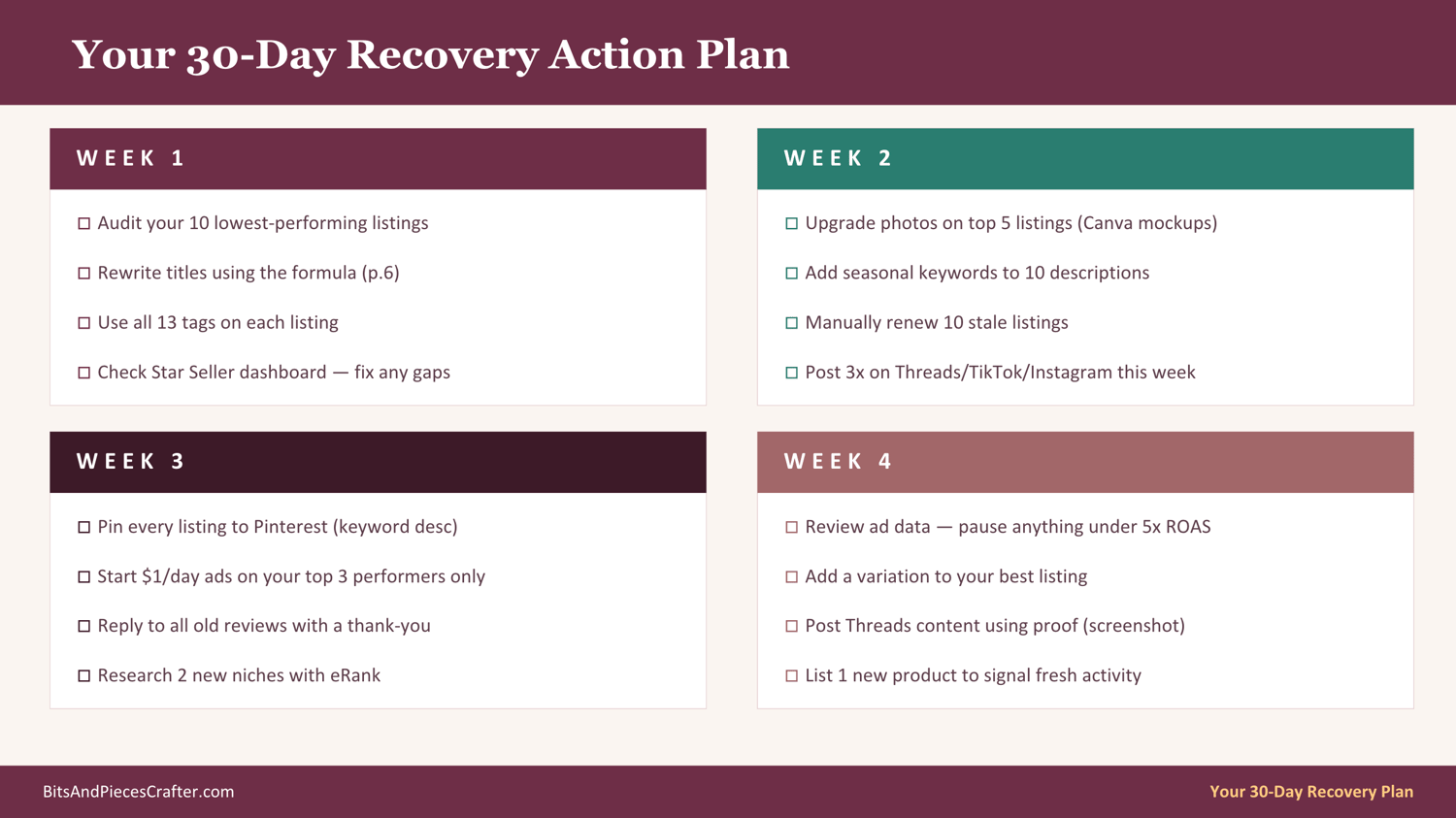
I condensed everything above into a four-week action plan. Here's the overview:
• Week 1 — Audit your 10 lowest listings, rewrite titles, fill all tags, check Star Seller dashboard
• Week 2 — Upgrade photos with Canva mockups, add seasonal keywords, renew stale listings, post 3x on social
• Week 3 — Pin every listing to Pinterest, start $1/day ads on top 3, reply to old reviews, research new niches
• Week 4 — Review ad data, add a variation to your best listing, post proof-based content, list one new product
24 actions. 4 weeks. One page.
🆓 FREE DOWNLOAD
Download the full Etsy Slow Sales Rescue Plan free — includes the complete 17-slide guide
and the printable one-page 30-day checklist with all 24 action items.
Slow Sales Aren't the End — They're a Signal
Here's what I want you to take from this post:
The $536 week was real. I have the screenshot. It happened because of a system I built over months of showing up, testing things, fixing what wasn't working, and not quitting during the quiet weeks.
The slow weeks were real too. They still happen. And when they do, I go back to the same checklist — SEO first, then listings, then traffic, then ads, then shop health. In that order. Every time.
The sellers who build something sustainable aren't the ones who only have good weeks. They're the ones who know what to do when it gets quiet.
Now you do too.
The sellers who build something sustainable aren't the ones who only have good weeks. They're the ones who know what to do when it gets quiet.
Resources Mentioned in This Post
• Free Etsy Slow Sales Rescue Plan (17-slide guide + printable checklist) → BitsAndPiecesCrafter.com
• You Can Make Digital Stickers with AI ($19) → BitsAndPiecesCrafter.com
• Digital Sticker Income System ($47) → BitsAndPiecesCrafter.com
• OpenArt AI — what I use to generate sticker artwork → openart.ai/home/?via=jenvg
• Watch the full video walkthrough on YouTube → Video
About the Author
Jen runs Bits & Pieces Crafter — an Etsy sticker shop with 7,700+ sales and 1,400+ five-star reviews. She designs digital and physical sticker sheets using AI tools and Canva, and teaches other sellers how to do the same through her courses at BitsAndPiecesCrafter.com. She believes journaling and planning help people appreciate and live life more fully — and that the right sticker can make opening your planner feel like a little celebration.
Follow along: @bitsandpiecescrafter on Etsy · Threads · Pinterest · TikTok · YouTube